
Building the Circle
Why Growing a Farm Doesn’t Mean Doing Everything Yourself
“Purpose-driven doesn’t mean doing everything yourself. It means knowing why you’re doing it, knowing what you can do well, and building the relationships that help complete the circle.”
Farm Snapshot
Journal Entry: 008
Date: September 28, 2026
This Journal’s Focus: Relationships, community, operational growth, problem-solving, resourcefulness, and learning when to ask for help.
The last few weeks at DaleWood Farms have had a way of proving something we already knew:
You can have a plan.
You can have experience.
You can have good equipment, good animals, good intentions and a decent head on your shoulders.
And you’re still going to need people.
We’ve made deliveries.
We’ve worked livestock.
We’ve built new relationships with producers.
I’ve spent more time learning inside the processing room.
We’ve served our community.
We’ve watched customers continue supporting the DaleWood Market.
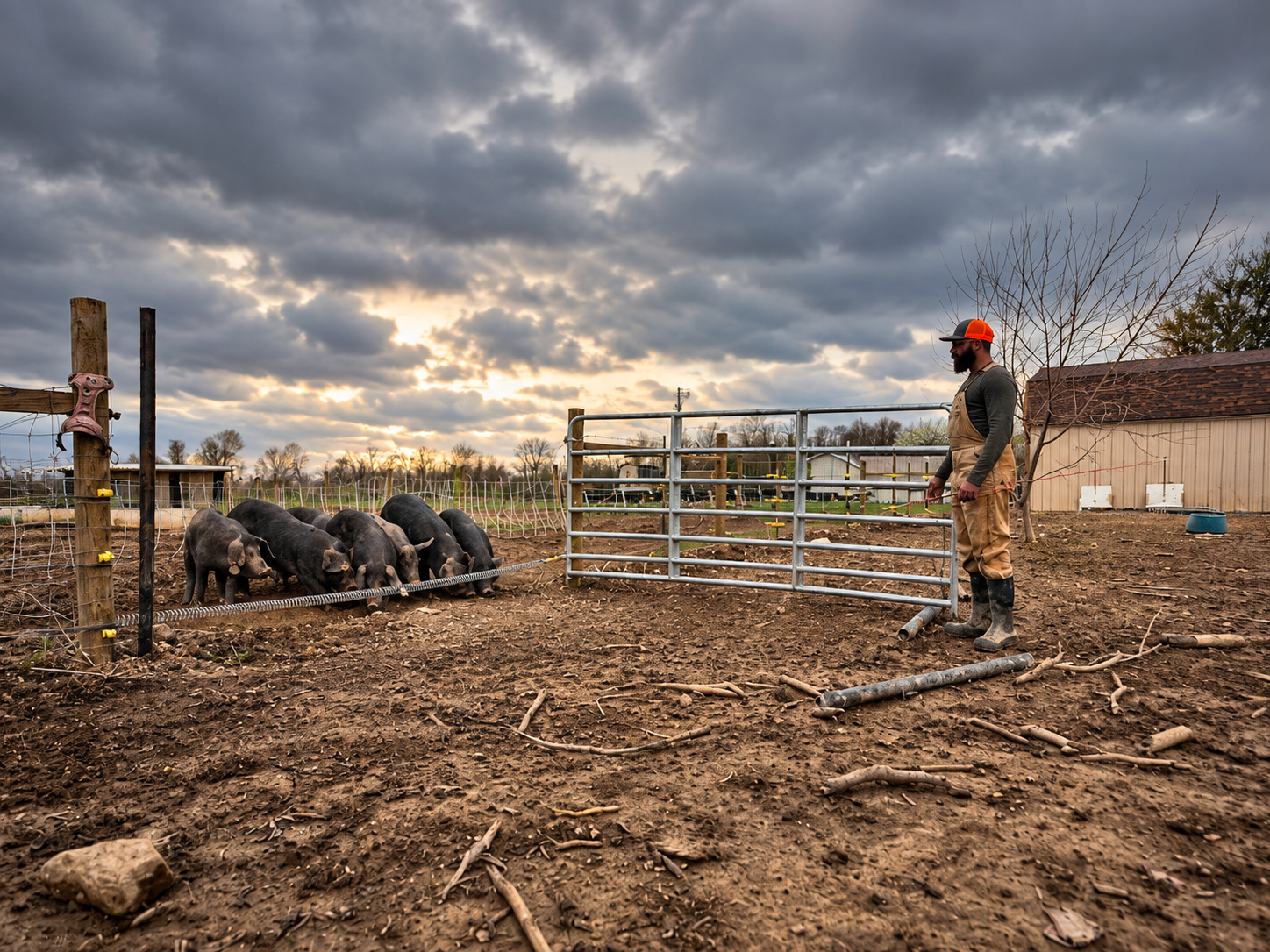
We’ve troubleshot an electric fence that was lying to me.
We’re trying to finish a walk-in freezer.
We’re trying to find equipment.
We’re dealing with repairs at home.
And somewhere in between all of that, we’re still feeding animals, cutting grass, answering messages, handling orders and trying to figure out what tomorrow needs before tomorrow gets here.
That’s farming.
That’s business.
That’s life.
And when I step back and look at everything that’s happened since the last Journal, I don’t think the story is any one project.
It’s about connection.
The circle is getting bigger.
Our job is figuring out how to keep it connected.
Farm Walk
Stop #1 — People Were Always Part of the Plan
There was a time when I thought growing a farm mostly meant adding more.
More animals.
More equipment.
More acreage.
More products.
More things we could do ourselves.
Experience gives you perspective.
Before long, you can create an operation that spends so much time trying to be everything that it forgets what it was actually built to become.
That’s not the direction we’re taking at DaleWood.
But let me make something clear.
We’re not just now discovering that relationships matter.
We’ve known that.
People are a resource.
Maybe the most valuable resource any operation has.
I learned that years before DaleWood Farms existed.
My time in the military showed me what happens when people with completely different jobs, skills, backgrounds and resources have to come together to accomplish something bigger than any one of them could handle alone.
I’ve watched places grow from practically nothing into functioning communities.
It doesn’t happen because one person knows how to do everything.
Somebody understands logistics.
Somebody knows construction.
Somebody understands security.
Somebody knows equipment.
Somebody handles communication.
Somebody knows the people.
Somebody knows where to get the thing everybody else needs.
You build a functioning system by connecting capable people.
Agriculture isn’t any different.
And that’s part of why our tagline has always mattered:
Pasture-Raised. Purpose-Driven.
Purpose has always required people.
What’s changing now isn’t the philosophy.
It’s the network.
We’re meeting more people.
Learning who does what.
Learning who does it well.
Learning who believes in doing business the way we do.
And finding more ways to connect those people.
That’s growth.
Stop #2 — A Community Grows Like a Garden
One of the best examples happened right here in Daleville.
Our community event at the Daleville Town Park and Splash Pad turned into a success.
We handed out somewhere around 74 or 75 meals.
But that number isn’t really what I remember most.
I remember people.
Neighbors brought brownies.
Others brought chocolate chip cookies.
The town had Hocus Pocus playing.
The Sanderson Sisters were out there.
Sparky from the Daleville Fire Department made an appearance.
The fire trucks were there.
Kids were running around.
People were talking.
Families ate.
At first, some folks didn’t quite know what to make of us.
And I understand it.
Someone walks up offering you food these days and your first thought might be:
All right. What’s the catch?
There wasn’t one.
We weren’t selling anything.
Nobody needed to subscribe.
Nobody needed to buy something later.
We weren’t looking for anything in return.
We wanted people to eat.
Once people understood that, they warmed up.
And then something simple became something meaningful.
Community.
Agriculture reminds me of a garden.
A garden doesn’t have to be one giant field of one crop.
It can have tomatoes over here.
Cucumbers beside them.
Squash.
Green beans.
Pumpkins.
Peppers.
Watermelon.
Different plants.
Different needs.
Different strengths.
But when harvest comes, all those different things can feed the same family.
Sometimes hundreds of families.
Communities work like that too.
We don’t all have to come from the same background.
We don’t have to look alike.
Think alike.
Have the same job.
Earn the same amount of money.
Or bring the same thing to the table.
The question is:
What happens when everybody brings something?
One pan of spaghetti doesn’t feed a town.
One tray of brownies doesn’t feed a town.
One farmer doesn’t feed a town.
But enough people willing to contribute?
Now you’ve got something.
You never really know what a community is capable of until people decide to work together.
Stop #3 — Purpose Is Bigger Than Our Pasture
Our farm is five acres.
Five acres teaches humility.
There are plenty of things we could try to raise here.
That doesn’t mean we should.
Someone wants beef?
Buy cattle.
Someone wants eggs?
Add layers.
Somebody asks about goat?
Buy goats.
Somebody wants lamb?
Get sheep.
Follow that logic long enough and pretty soon you’ve created a zoo with an accounts-receivable department.
That’s not efficiency.
That’s how you overwhelm yourself.
DaleWood doesn’t need to raise everything people might eventually ask us for.
We need relationships with people who are already doing those things well.
Over the last few weeks, we’ve been developing relationships with cattle producers raising different types of market steers.
Some grass-finished.
Some raised through more conventional production systems.
That has already changed things for our own family.
We’re no longer automatically looking toward a grocery-store meat case every time we want beef.
If I want to practice a cut, test a sausage recipe, experiment with grinding or simply put something on our own family table, we’re developing connections closer to agriculture itself.
And other families are looking for those connections too.
People come to DaleWood because they want to know more about where their food comes from.
If somebody comes looking for a whole or half beef, we may know a farmer worth talking to.
We can help make the connection and help them better understand the journey from a live animal to their freezer.
And we’re finding more of those relationships everywhere.
Cattle.
Poultry.
Goats.
Eggs.
Produce.
Processing.
And recently we found out one of our neighbors is building a bakery.
How about that?
That’s the market.
Not one farm trying to replace everybody else.
A network.
When somebody knocks on our door looking for something, we may not always have it.
But we might know which door to knock on next.
That is purpose-driven agriculture too.
Stop #4 — What We Raise Still Matters
Building partnerships doesn’t mean we’re losing focus on our own production.
Pork remains one of the foundations of DaleWood Farms.
Our federally inspected pork products continue moving through the DaleWood Market, and we appreciate every person keeping us busy.
This past weekend was another reminder.
Orders needed sorted.
Customers needed contacted.
Deliveries needed coordinated.
Routes had to make sense.
Product had to stay properly handled.
And people needed to receive what they paid for.
Nobody takes a dramatic sunset photograph of coordinating delivery times.
But that’s where a farm starts becoming an operation.
Raising the animal is only part of the system.
Communication matters.
Inventory matters.
Packaging matters.
Scheduling matters.
Transportation matters.
Customer service matters.
Follow-up matters.
Planning matters.
Our pigs are teaching us that too.
We had several animals we originally intended to keep longer as future grow-outs.
Then interest continued coming.
Those animals found homes.
Now we don’t have additional grow-out availability planned for December 2026, and we’re already thinking about July 2027.
How many can we responsibly commit?
How many do we retain?
How many may become feeder pigs?
Which animals fit future breeding plans?
Which animals eventually move into our inspected pork program?
Those decisions have to happen months before somebody wants pork in their freezer.
That’s why early conversations matter.
That’s why reservations matter.
That’s why relationships matter.
One lesson the military burned into me still works pretty well here:
Prior planning prevents piss-poor performance.
Spend enough time farming and you’ll see evidence of that statement almost every day.
Stop #5 — The Fence That Lied to Me
For several days, something about the pigs had been bothering me.
They were getting awfully comfortable with the electric fence.
Not escaping.
Not charging through it.
Just…
Disrespectful.
They would ease underneath the wire.
Eat some grass.
Move a little farther.
Eat some more.
Then another piglet would join in.
Now, pigs are smart.
Really smart.
And when several pigs start repeatedly doing something they normally wouldn’t do, there’s usually information there.
The problem was my energizer kept blinking green.
I’ve heard this fence pop animals before.
Usually, if there’s a problem, the system tells me.
So I’m watching the piglets thinking:
Maybe they’re just getting brave.
And then comes that terrible little thought everybody who’s ever owned an electric fence has had.
Touch it.
Just reach out.
Give it a quick tap.
You’ll know immediately.
Now, I own a voltage tester.
I know I own a voltage tester.
I also know grabbing an electric fence with your bare hand isn’t listed in any respectable diagnostic procedure.
Still, for about two seconds, my brain presented a surprisingly convincing case.
Common sense eventually won.
I got the tester.
The obvious suspect was vegetation.
There was plenty of grass and brush touching the line, so I grabbed the weed eater and started clearing.
The pigs had actually helped.
Since the fence wasn’t carrying what it normally should, they’d spent several days eating underneath it.
They basically cleared their own inspection path.
Thank you, unpaid maintenance crew.
Eventually I made it back to the grounding rods.
There was the real problem.
One of the ground connections had broken and was barely touching.
I shut everything down.
Repaired the ground.
Brought the system back online.
Voltage returned.
And the pigs confirmed the repair without requiring me to volunteer a finger.
There’s still another fault somewhere.
The energizer is blinking red now, so I’ve still got an arc or short to locate.
But we’ve got voltage again.
So the process continues.
Walk the line.
Check connections.
Test.
Diagnose.
Repair.
Monitor.
My automotive and diesel background taught me that process years ago.
Apparently pigs just make troubleshooting more entertaining.
Stop #6 — Respect the Trade
Those same principles—observe, learn, diagnose, improve—follow me inside the processing room too.
I’ve spent more time there over the last few months learning the commercial side of meat processing.
And let me tell you:
It’ll humble you.
In the few months I’ve been doing this more seriously, I’ve managed to cut, poke or prod somewhere around six of my own digits.
My hands are apparently keeping their own attendance record.
The funny part is that I’ve processed animals at home for years.
As a backyard butcher, I might have cut myself twice.
Then you enter a commercial environment.
More animals.
More repetition.
More speed.
Different species.
Different cuts.
Different customer instructions.
Different people showing you slightly different ways of doing the same job.
And you suddenly realize how deep the trade actually goes.
An experienced butcher has earned respect.
Think about what that person has to know.
Anatomy.
Muscle structure.
Joints.
Organs.
Knife control.
Food safety.
Temperature.
Workflow.
Yield.
What to inspect.
What to keep.
What gets discarded.
What becomes a steak.
What becomes a roast.
What becomes grind.
How to take someone else’s animal and return what that customer actually requested.
There was a time when the local butcher’s practical knowledge made them one of the most valuable people in a community.
I understand why.
Everybody develops their own touch.
Their own movement.
Their own order.
Their own way of holding the knife.
That’s not something you master because you watched three videos and bought a sharpening stone.
You earn it.
One animal at a time.
One lesson at a time.
And, apparently in my case, one Band-Aid at a time.
Stop #7 — Never Be Too Proud to Learn What You Don’t Know
Customers teach us too.
Somebody once asked me about cow-foot stew.
I thought they were messing with me.
Seriously.
I thought somebody was yanking my chain.
Then I looked it up.
Sure enough.
Real dish.
Long history.
Important food in multiple cultures.
Another person asked about pigeon.
Pigeon?
My first thought was:
The rat of the sky?
Then I started researching.
Turns out pigeon and squab have been eaten around the world for a very long time.
That’s the lesson.
Just because I haven’t eaten something doesn’t mean somebody else doesn’t value it.
Just because I haven’t used something doesn’t make it useless.
Just because I haven’t seen something done doesn’t automatically make it foolish.
Ask.
Research.
Read.
Call somebody.
Talk to your veterinarian.
Use Extension resources.
Use USDA and agricultural publications.
Talk to processors.
Talk to experienced farmers.
Talk to the older man or woman down the road who’s been doing something for forty years.
Then compare what you learn.
Independence doesn’t mean already knowing everything.
I like to remind myself that independence starts with an I for a reason.
At some point, I have to take responsibility for figuring out what I don’t understand.
But independence and isolation aren’t the same thing.
Real independence means becoming capable enough to handle what you can—and wise enough to recognize when somebody else knows more.
Stop #8 — Don’t Harvest People
There’s another lesson we’re learning as the network around DaleWood grows.
Relationships have to be genuine.
Don’t become friends with another farmer just so you can learn everything they’re doing, copy it, disappear and act like you invented it.
Don’t harvest people for information.
Give credit.
Send business back.
Share opportunities.
Help when you’re able.
Say thank you.
Support the people who supported you.
There is enough work in agriculture that we don’t have to spend our time trying to steal from one another.
We’d rather build something where everybody involved has an opportunity to get stronger.
That doesn’t mean relationships are always easy.
Real relationships usually aren’t.
Families aren’t perfect.
Friendships aren’t perfect.
Business relationships definitely aren’t perfect.
I’ve yet to meet a family that isn’t at least a few beans short of a good chili somewhere.
We’re human.
There’s dysfunction in all of us.
But good relationships survive because there’s some reciprocity.
One of the lessons I carried away from The 7 Habits of Highly Effective People years ago was the importance of looking for win-win solutions.
That matters here.
If every interaction produces a winner and a loser, eventually people stop wanting to interact with you.
Listen.
Teach.
Learn.
Share.
Send customers.
Open doors.
Help each other.
A one-sided relationship eventually stops being a relationship.
And agriculture is too difficult to spend our energy creating more enemies when we could be building stronger neighbors.
Stop #9 — Use What You Have. Share What You Can.
Farming teaches you to look at value differently.
Something can be nearly worthless to me and incredibly useful to somebody standing fifty feet away.
That’s one of the reasons I don’t like automatically calling everything we aren’t using waste.
Sometimes it is waste.
Sometimes it’s a resource that hasn’t found its next purpose yet.
Maybe it’s excess produce.
Maybe it’s a legal take-home portion from processing that a family knows how to use.
Maybe somebody wants bones for broth.
Maybe another farmer has a safe, appropriate use for an agricultural byproduct you would otherwise pay to dispose of.
Maybe you’ve got lumber leaning against a barn.
Old fencing.
A pile of dirt.
A part from a machine.
An implement you haven’t used in five years.
Or knowledge that costs you absolutely nothing to share.
The answer isn’t to blindly reuse everything.
That’s where common sense and research matter.
Not every plant is safe for every animal.
Not every animal product should become feed.
Not every byproduct can legally or safely be used the way somebody on the internet says it can.
So do your homework.
Ask the veterinarian.
Talk to Extension.
Read credible agricultural resources.
Ask the processor.
Understand the rules.
But once you’ve done that, don’t assume the only two choices are sell it or throw it away.
There’s a third option.
Share it.
Not everything useful needs an invoice attached to it.
Sometimes your neighbor needs exactly what you’re finished with.
Sometimes somebody has exactly what you need.
Sometimes you just give something away because putting something useful back into the community feels like the right thing to do.
That doesn’t make you a sucker.
It doesn’t mean you don’t understand business.
And it doesn’t mean you should allow people to take advantage of you.
Pay attention to how people handle your generosity.
There are lessons there too.
But don’t become so guarded that nobody ever gets the chance to experience generosity from you.
Asking for help is hard enough already.
Most of us have been conditioned to wonder what strings are attached.
So sometimes be the one who breaks that cycle.
Offer first.
There’s something biblical about an offering.
You give because you have something you’re able to give.
Not because somebody got on their knees and begged correctly.
Not because you’re guaranteed repayment.
Because sometimes the best use of what you have is helping somebody else use it well.
That’s agriculture too.
A good farm shouldn’t only grow animals and crops.
It ought to grow people around it when it can.
Stop #10 — Sometimes Purpose Sounds Like “We Need Help”
And that’s where the lesson has to turn around and point back at us.
Because DaleWood needs help too.
There.
I said it.
We can’t write an entire Journal telling people to share resources, ask questions, build relationships and use their community—and then act like Brian and Maci have everything covered.
We don’t.
It’s the two of us.
And five acres can create an astonishing amount of work for two people.
The grass does not care how busy we are.
The pigs don’t care what appointments are on the calendar.
Equipment doesn’t schedule its breakdowns.
And apparently our home air conditioner didn’t receive the memo that we already had enough projects.
There are things around this farm we have already started but don’t yet have the money, materials, equipment or labor to finish.
Our walk-in freezer is probably the clearest example.
The insulated box is built.
Approximately ten feet by ten feet by ten feet inside.
Six-inch polyurethane-insulated panels.
Walls.
Ceiling.
Floor.
Commercial freezer door.
A lot of the hard structural work is already here.
But making it an operational commercial freezer still means refrigeration equipment, electrical work, controls and professional installation.
Realistically, we’re budgeting in the neighborhood of $15,000 to $18,000 to finish that project correctly.
That’s one project.
We still need a tractor.
Something with a front loader.
Something capable of running the implements that make land management practical.
A tiller.
A plow.
Discs.
Mowing equipment.
Things that let us improve this place without constantly finding somebody to borrow equipment from.
We’ve got areas where earthwork would dramatically improve usability.
A dozer.
A skid steer.
An experienced operator.
Even a connection to somebody who knows somebody.
Those things matter.
We have campers and structures with potential.
They could eventually become useful sleeping quarters or working spaces.
We’ve already acquired some of the bones.
What we don’t always have are the materials, time and skilled labor necessary to finish them.
There’s vehicle maintenance.
Fence maintenance.
Mowing.
Water systems.
Barn work.
Animal care.
Construction.
Mechanical work.
Website work.
Deliveries.
Customer messages.
Accounting.
Content.
And the thousand little jobs nobody notices until nobody does them.
Sometimes what we need isn’t money.
Sometimes it’s simply another set of hands.
Maybe somebody reading this has a piece of equipment sitting in a barn.
Maybe you’ve got building materials left from a project.
Maybe you operate heavy equipment.
Maybe you’re a carpenter.
Electrician.
HVAC technician.
Refrigeration technician.
Mechanic.
Welder.
Maybe you’ve got a Saturday and don’t mind working.
Maybe you know someone we should meet.
Maybe you don’t have any of those things and want to throw five dollars toward the next project.
All of it counts.
Some help jingles.
Some folds.
Most of it these days apparently travels through a phone.
We’ll take all three.
But seriously:
If you can help us, help us.
And if we can help you, ask.
We’re not building DaleWood to become an island.
We’re trying to build another strong piece of a strong community.
That’s how the circle works.
Observation
When I step back from the last few weeks, the biggest change at DaleWood isn’t a new building.
It isn’t a new product.
It isn’t even another litter of pigs.
It’s the number of connections.
A cattle producer connects with a family looking for beef.
A butcher teaches me something I bring back home.
A customer asks a question that sends me down a new research path.
A neighbor brings brownies to a community meal.
Another neighbor builds a bakery.
Customers order pork through the Market and keep our delivery days moving.
Piglets tell me the electric fence isn’t working before the energizer does.
Someone has a resource we need.
We may have something somebody else needs.
That’s the circle.
The farm is becoming less like a pile of independent projects and more like a system.
Not because DaleWood owns every piece.
Not because we do everything ourselves.
Because we’re getting better at connecting the pieces.
That’s the kind of growth I’m interested in.
Looking Ahead
There’s plenty happening next.
The piglets are growing well.
Our additional December 2026 grow-out availability is currently spoken for, and we’re already deciding what July 2027 needs to look like.
So if having DaleWood raise a pig for your family’s freezer is something you’ve been thinking about, talk to us before the last minute.
Early conversations help us plan better.
They help us determine which animals stay here.
Which may become future breeding stock.
Which are available to other farms.
Which are committed to grow-out families.
And how many animals we can realistically support.
We’re continuing to build our producer network too.
So if you’re looking for beef, livestock, eggs, produce or another agricultural product and don’t see it directly on our Market, ask anyway.
We may not raise it.
But we may know the person who does.
And we’ve noticed more people subscribing to the DaleWood journey lately.
Thank you.
Seriously.
Some of you have been here from the beginning.
Some just found us.
Some buy from the Market.
Some share our posts.
Some comment.
Some quietly read every Journal.
Some have donated.
Every one of those actions helps.
Today you may not need anything from us.
Six months from now, maybe you’re looking for a feeder pig.
A breeding animal.
Local beef.
A farmer.
A processor.
Or simply advice from somebody who’s already made the mistake you’re about to make.
Stay connected.
Farming moves in seasons.
Availability moves in seasons.
Life moves in seasons.
A relationship we build today may solve a problem neither of us knows we’re going to have next year.
Until Next Week…
DaleWood isn’t trying to become the farm that does everything.
We’re trying to become the farm that helps complete the circle.
Raise what makes sense.
Buy what makes sense.
Build what makes sense.
Learn what we don’t know.
Research what we don’t understand.
Respect the laws and regulations we encounter along the way.
Develop our skills.
Build relationships with people who know things we don’t.
Help people when we’re able.
Ask for help when we need it.
Keep moving.
There is red tape.
There are bills.
There are mistakes.
There are projects sitting half-finished.
There are days when everything works.
There are days when the electric fence lies to you.
There are animals that thrive.
There are animals you lose.
There are customers you gain.
There are people who promise to help and disappear.
And there are people who show up when you never expected them to.
That’s building something.
Rome wasn’t built in a day.
Neither was DaleWood.
A piece of ground doesn’t become a working farm because somebody puts a sign at the road.
There’s a process.
A fence repaired here.
A delivery made there.
A new customer.
A new farmer.
A new lesson.
A new problem solved.
Another problem still waiting.
New family.
New levels of love.
New opportunities.
And another project added to the list before the last one gets crossed off.
That’s not perfection.
That’s progress.
The circle isn’t complete.
Maybe it never will be.
But every useful relationship, every lesson, every customer, every neighbor and every person willing to lend a hand closes another gap.
We may never eliminate every loss.
But we can make damn sure we don’t waste the lesson.
Become Part of the Journey
If you’re new to DaleWood Farms, welcome.
These Journals aren’t being written after we’ve succeeded and figured everything out.
They’re being written while we’re doing it.
While the fence still has a fault.
While we’re saving for equipment.
While the freezer still needs finished.
While we’re learning.
While we’re making mistakes.
While we’re meeting people.
While we’re building.
That’s the point.
If you want to be part of the journey, there are plenty of ways to do it.
Visit the DaleWood Market and support the products we currently have available.
Ask about our Black Beauty pigs, feeder pigs and future grow-out opportunities.
If you’re looking for something agricultural we don’t currently offer, ask us anyway.
Share the farm with somebody who may appreciate what we’re building.
Comment.
Tell us what you’re working on.
And if you believe in this mission and want to help us build the next stage, our website includes a Donate option.
Give once.
Give monthly.
Give yearly.
Give whatever makes sense to you.
And remember:
Support isn’t always money.
Maybe you’ve got equipment.
Materials.
Knowledge.
Time.
A connection.
A skill.
Or simply another pair of hands.
We tell people to ask for help.
So we’re asking.
We tell people to offer help.
So we’re offering.
If DaleWood can help you, knock on our door.
And if you can help DaleWood, ours is open too.
So here’s the question I want to leave with you this week:
What do you have—or what do you know—that could become more valuable if it were connected to the right person?
Leave it in the comments.
You never know who might read it.
You never know who might need exactly what you have.
And you never know which conversation might be the beginning of something neither person could have built alone.
That’s what we’re building here.
One animal.
One skill.
One delivery.
One lesson.
One relationship.
One helping hand at a time.
Brian & Maci Webb
DaleWood Farms
Pasture-Raised. Purpose-Driven.
Leave a Reply