
The Movement Series • Love, Power & Misunderstanding • Post 9
One of the hardest lessons I’ve learned is this:
Sometimes the healthiest thing you’ll ever do will look like rejection to someone you love.
Not because you’ve stopped loving them.
Not because you’ve stopped caring.
But because love and unlimited access are not the same thing.
Somewhere along the way, I think a lot of us started confusing the two.
We started believing that if we really loved someone, we’d always answer the phone.
Always say yes.
Always show up.
Always carry the extra weight.
Always make room.
Always understand.
Always forgive.
Always absorb.
Then one day…
You finally say, “I can’t.”
And the person standing across from you doesn’t hear honesty.
They hear abandonment.
I don’t think most relationships fall apart because people stop loving each other.
I think they fall apart because people slowly stop understanding each other.
Those aren’t the same thing.
Love can still exist while trust begins to crack.
Respect can still exist while resentment quietly grows.
Good intentions can still exist while two people slowly become exhausted trying to meet expectations that were never spoken out loud.
Then someone finally says,
“I need some space.”
“I can’t keep doing this.”
“Something has to change.”
The words are simple.
The emotions aren’t.
I’ve been on both sides of that conversation.
I’ve been the one who needed distance.
And I’ve been the one wondering why someone suddenly felt so far away.
Neither side feels good.
One feels guilty.
The other feels rejected.
Both people usually leave believing they weren’t understood.
That’s why boundaries are so difficult.
Healthy boundaries don’t just change behavior.
They change access.
And when someone has grown accustomed to unlimited access, even a healthy limit can feel like loss.
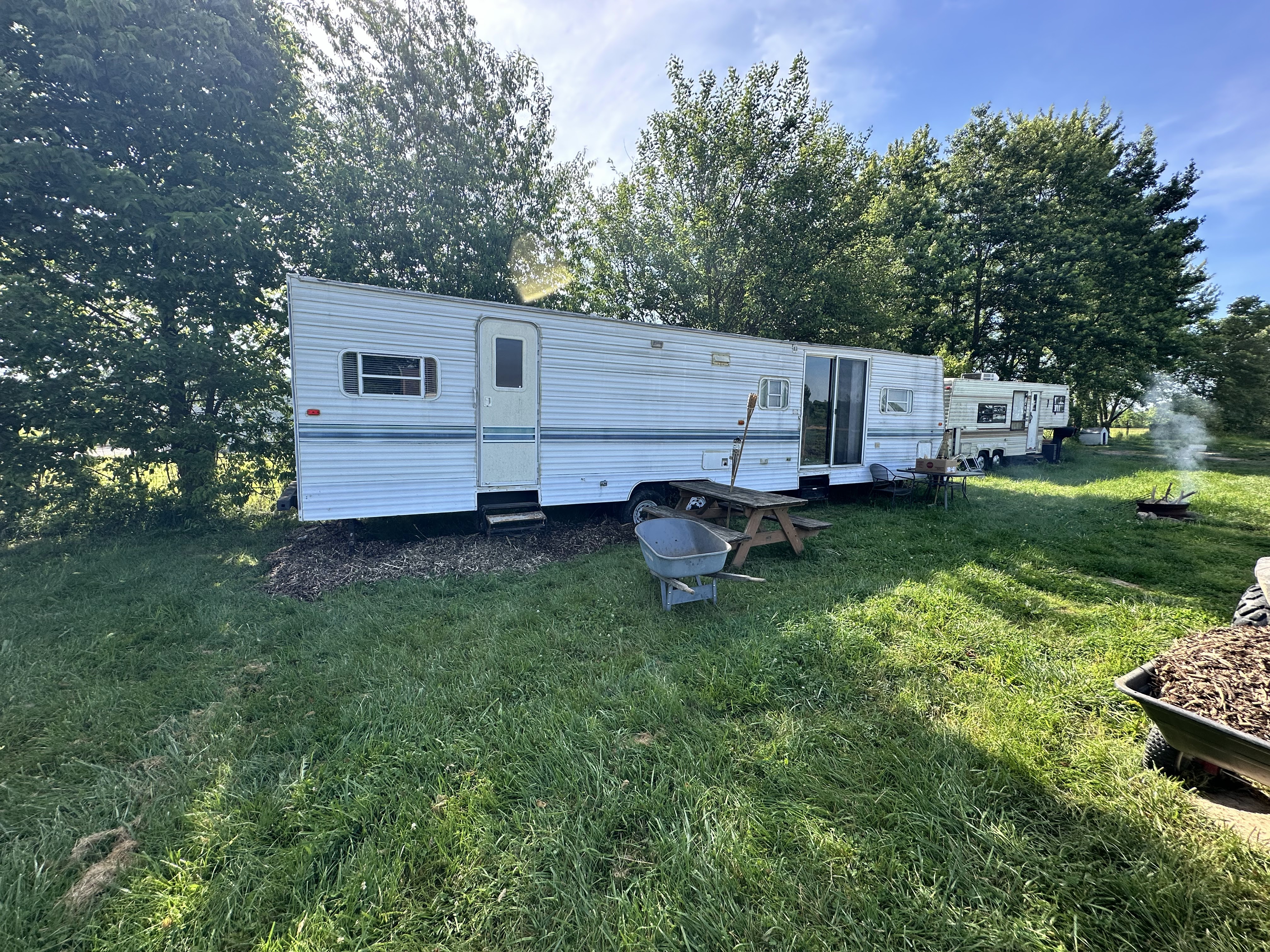
A while back, I made a trade with one of my neighbors.
He wanted my old Bobcat mini skid steer—the one that had been sitting beside my barn ever since I finished digging the pond. It was an old machine, somewhere around 1985, but after a little attention it still ran like something built in a different era.
Later that year he called me.
He’d finally worked out the purchase of his family’s new home and no longer needed the park-model camper he’d bought as temporary housing.
He knew I’d always wanted a camper.
His words were simple.
“Let’s just swap.”
It sounded like a fair deal to both of us.
The only challenge was getting the camper home.
So I called my favorite uncle, Glen.
He’s in his upper sixties now, and I’ve always admired how willing he is to help. If I needed an extra set of hands, he was one of the first people I’d think to call.
Honestly, all I really needed was his truck and the proper hitch.
Instead, he showed up ready to drive.
Before we left, I did what I always do.
I checked the hitch.
The safety chains.
The lights.
Just a quick walk-around.
Then I offered to handle the towing.
Not because I didn’t trust him.
Because towing oversized trailers is something I’ve done before, and I knew what to watch for.
The moment I offered, I saw the look on his face.
Whether he’d ever admit it or not, I’d stepped on his pride.
So I handed him the keys.
When we arrived, the property was mostly an open five-acre field.
The grass was high, but it looked clear enough.
I guided him to the camper.
We hooked everything up.
As we started pulling away, he made a wide turn so we could head back toward the road.
I climbed into the passenger seat and immediately started checking the mirrors.
That’s when I saw it.
He was cutting the turn too tight.
The rear corner of that long camper was about to hook an old Ferguson tractor sitting in the field.
“Straighten up!”
It was too late.
The camper scraped down the tractor.
The camper was damaged.
The tractor’s rear tire was punctured through the sidewall.
For the next thirty minutes we worked quietly, trying to separate everything without making it worse.
I never once said, “I told you so.”
I could see his pride had already taken enough of a hit.
Before we left, he took pictures of the damaged tire.
He mentioned a place near his house that might have a used replacement.
He knew my neighbor and I were on good terms, and he didn’t want to damage that relationship.
I walked away believing he intended to make it right.
Since it was my trade, I called my neighbor myself.
I explained exactly what had happened.
I apologized.
And I promised we’d replace the tire.
A couple weeks passed.
Nothing.
Finally, I called Glen to ask about it.
That’s when everything changed.
He immediately told me he’d never planned on replacing the tire.
According to him, I’d misunderstood the entire conversation.
I remember sitting there thinking…
I don’t have the time.
I don’t have the energy.
And honestly, I don’t have the desire to argue about what was or wasn’t said two weeks ago.
So I ended the call.
Looking back, that wasn’t the day I stopped loving my uncle.
It was the day I finally stopped expecting him to be someone he wasn’t.
There’s a difference.
That realization hurt more than the damaged camper ever did.
For years, I’d confused hope with reality.
I kept believing the next conversation would be different.
The next disagreement would be handled differently.
The next misunderstanding would somehow produce a different version of the relationship.
It never did.
So I didn’t cut him out of my life.
I didn’t make a dramatic announcement.
I didn’t tell the family he was a terrible person.
I adjusted my expectations.
And once I adjusted my expectations…
I adjusted my access.
I called less.
I depended on him less.
I stopped putting both of us in situations that almost always ended in frustration.
Not because I loved him less.
Because I finally accepted the relationship for what it actually was instead of what I kept hoping it would become.
I think that’s where many of us get boundaries wrong.
We assume a boundary means someone has stopped caring.
Sometimes that’s true.
But often it isn’t.
Sometimes a boundary is simply the moment reality finally catches up with expectation.
It’s accepting someone without expecting them to become someone else.
There’s another side to this conversation that deserves attention.
Not everything people call a boundary actually is one.
Some people disappear instead of communicating.
Some people punish with silence.
Some people weaponize distance and call it “protecting my peace.”
That’s not maturity.
Healthy boundaries don’t exist to control someone else.
They exist to clearly communicate what is necessary for a relationship to remain healthy.
I’ve learned something else over the years.
The people who love you won’t always understand your boundary immediately.
And the people setting boundaries won’t always communicate them perfectly.
Sometimes we’re speaking from exhaustion.
Sometimes we’re listening through fear.
Neither makes us evil.
Both make us human.
Maybe that’s why I’ve become slower to judge these moments.
The older I get, the less interested I am in deciding who’s right.
The more interested I become in asking better questions.
What changed?
What hurt?
What expectation was never spoken?
What fear is underneath this conversation?
Because most broken relationships aren’t destroyed by one dramatic moment.
They’re worn down by years of misunderstanding, disappointment, and expectations that quietly outgrew reality.
Before calling someone’s boundary abandonment…
Ask yourself if you’ve confused access with love.
Before calling your distance a healthy boundary…
Ask yourself whether you’ve communicated it with honesty and respect.
Because healthy relationships don’t require unlimited access.
They require mutual respect.
Respect survives honesty.
Control rarely does.
And maybe the most freeing lesson I’ve learned is this:
Boundaries aren’t always built because someone else changed.
Sometimes they’re built because you finally accepted they weren’t going to.
That isn’t giving up.
That isn’t bitterness.
That isn’t abandonment.
Sometimes protecting your peace doesn’t mean walking away from someone.
Sometimes it means walking away from the version of them you’ve been hoping they’ll become.
Love them for who they are.
Adjust your expectations.
Adjust your access.
And if you’re fortunate, you’ll discover that peace and love were never enemies to begin with.
Continue the Conversation
Have you ever had to adjust your expectations of someone you loved?
Not because you stopped caring—but because you finally accepted the relationship for what it truly was?
I’d genuinely like to hear your perspective.
Leave a comment below and join the conversation.
If DaleWood Talks has challenged or encouraged you, consider subscribing. Every share, subscription, and contribution helps us continue building a place where difficult conversations can happen with honesty, humility, and respect.
And if one day our paths cross at DaleWood Farms, maybe we’ll have this conversation around a real fire instead of through a screen.


Leave a Reply