
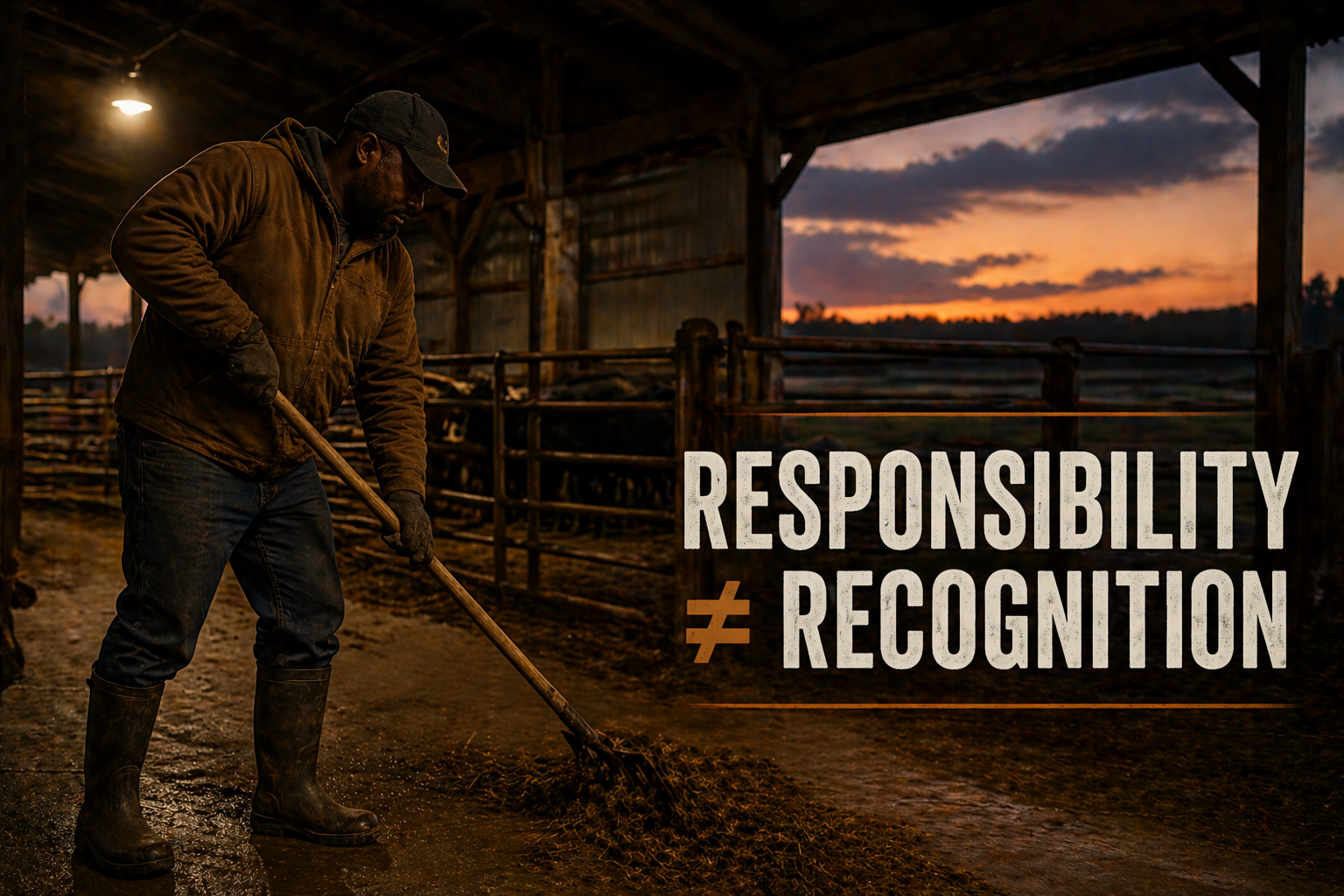
Movement Series II — Man Code: Field Notes | Post 5
I’ve seen this pattern more times than I can count.
A man steps up.
Takes responsibility.
Carries what needs to be carried.
Not because he has to.
Because it’s who he is.
At first, it feels right.
You handle what others avoid.
You fill the gaps.
You keep things moving when they would otherwise stall.
There’s a sense of purpose in that.
A sense of identity.
You become the one who can be counted on.
And over time, that reliability becomes expected.
Not acknowledged.
Not questioned.
Just… assumed.
That’s where something starts to shift.
Not in what you do.
But in how it’s received.
Because carrying weight doesn’t guarantee partnership.
Most people don’t notice when the balance changes.
They just adjust to it.
If you always show up,
people stop checking if you’re able to.
If you always handle things,
people stop asking if you need help.
If you always carry your share—and then some—
eventually it stops being seen as extra.
It becomes normal.
On the farm, systems behave the same way.
If one part of the operation consistently absorbs pressure, the rest of the system reorganizes around it.
Feed gets handled.
Water gets checked.
Pens stay maintained.
Not because the system is balanced—
but because one operator keeps it balanced.
And that works.
Until it doesn’t.
Because over time, the load doesn’t redistribute.
It compounds.
Responsibility stacks.
Expectations rise.
And the person carrying it becomes less visible, not more.
This is where frustration starts to build.
Not always outwardly.
Most of the time, it stays internal.
Because the same people who carry weight well
also tend to tolerate it longer than they should.
The mistake isn’t taking responsibility.
Responsibility is necessary.
The mistake is expecting responsibility to automatically create recognition.
It doesn’t.
Recognition requires awareness from others.
Responsibility often removes the need for others to pay attention.
So the more consistent you are,
the less visible your effort can become.
Not because people don’t care.
Because the system adapts.
That’s the part no one really talks about.
You can do everything right
and still end up carrying more than you should.
At a certain point, the question changes.
It’s no longer:
“Am I doing enough?”
It becomes:
“Is this being carried the way it’s supposed to be?”
Because responsibility without recognition doesn’t stay neutral.
It either builds quiet resentment—
or it forces a shift in awareness.
Carrying weight proves strength.
But it doesn’t guarantee support.
The strongest people aren’t just the ones who can carry more.
They’re the ones who can recognize when something isn’t being carried together.
And that awareness matters.
Because systems don’t stay balanced on their own.
People maintain them.
Or they don’t.
Continue the Series
What Discipline Didn’t Prepare Me For
Standing Without Validation
Movement Series II — Man Code: Field Notes
Leave a Reply