
Life on the Farm Has Its Lessons
It was just another evening walk — feed buckets in hand, the sound of the birds settling in for the night — when I noticed the flock gathered around one of our old hens. At first, I thought she was just resting, but when I knelt down, she gave one last quiet breath.
Moments like that are always bittersweet. You don’t ever get used to it, but you do learn to honor it. Around here, nothing goes to waste. Life, death, and growth all circle together. So instead of losing sleep over a lost hen, we turned it into a teachable moment.
I grabbed Israel, our farm helper, and said, “We’re processing our first chicken tonight.”
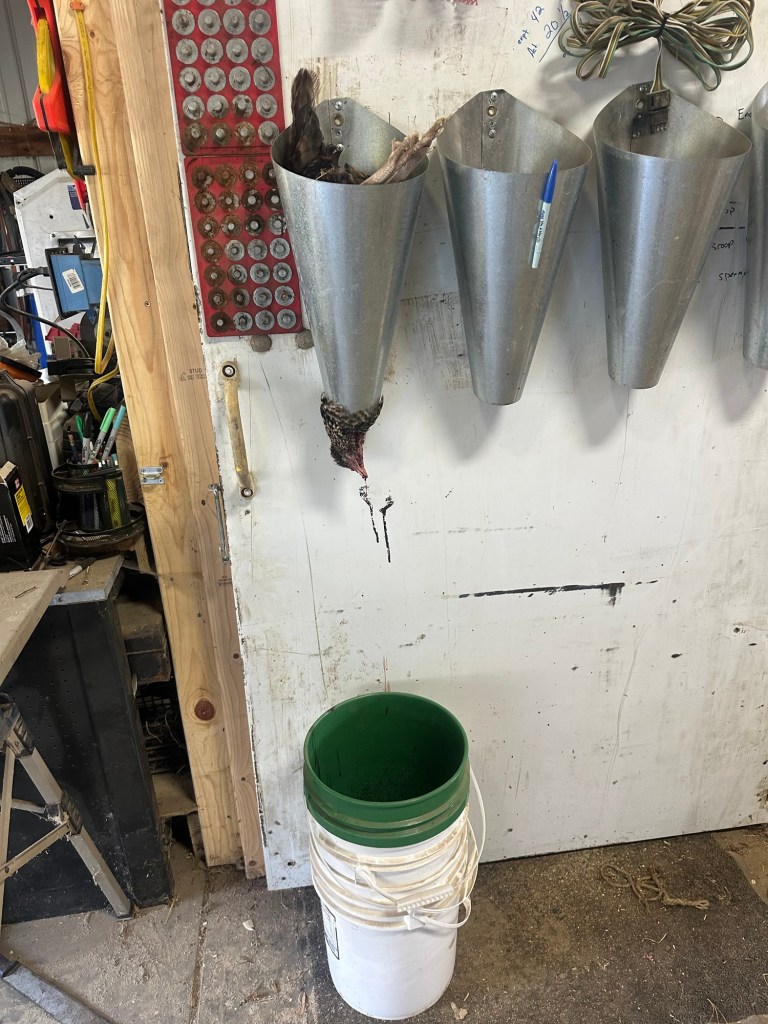
The old hen placed in the hugging cone to bleed out naturally — calm, respectful, and part of the farm’s rhythm. A clean process that honors the animal’s life.
Learning in Real Time
Even though I’ve done this plenty of times, I like to start by reviewing — so we pulled up a quick tutorial from one of the farm processors we follow online. Every time we process, we treat it like a learning session.
We set up the hugging cone (or killing cone) and placed the bird gently inside to let her bleed out naturally. She had already passed, but this step helps ensure a clean process and respects the animal. Beneath her, we set a bucket to catch what needed catching.
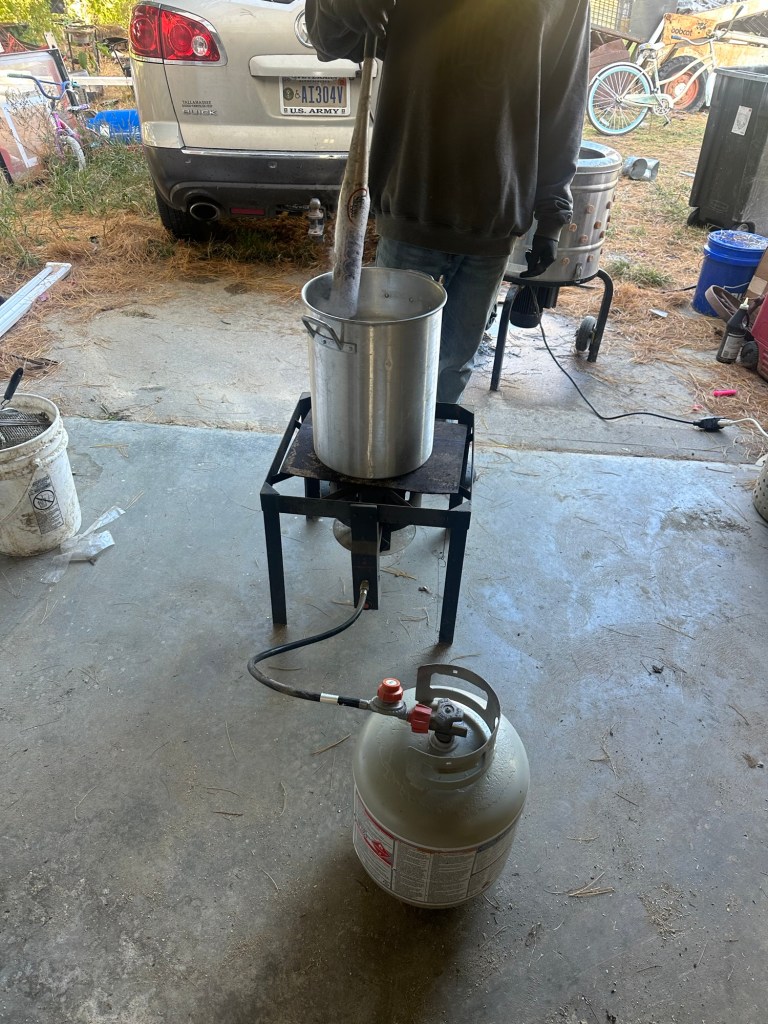
The scalding pot heating up — soapy water between 147–150°F loosens feathers without cooking the skin.
While that was happening, we fired up the propane burner and filled our scalding pot with warm, soapy water — right around 147–150°F. That’s hot enough to loosen feathers but not hot enough to cook the skin.
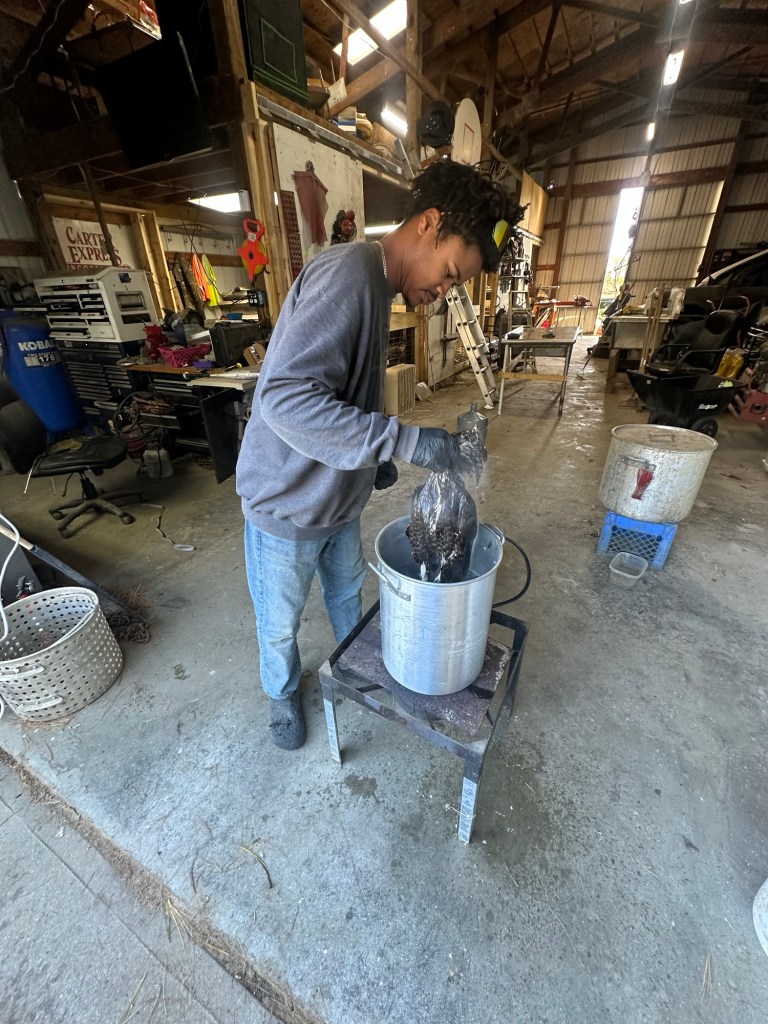
Israel’s first time dipping the bird into the pot — learning how to judge the right temperature and timing.
Once the temperature was right, Israel dipped the bird in. You’ll see from the pictures — gloves on, calm and focused. After a few dunks, the feathers released easily in our mechanical de-featherer. Anything left, we hand-plucked clean.
Breaking Down the Bird
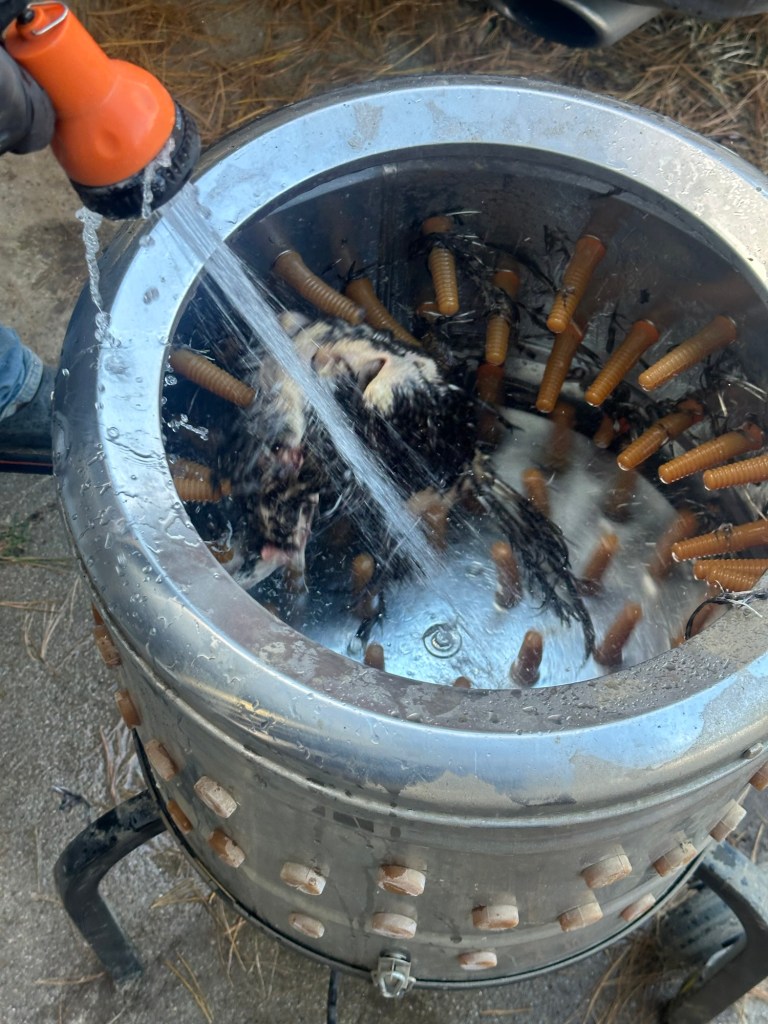
The automatic de-featherer spinning away — a quick rinse helps the plucking fingers clear the loosened feathers.
Next came the table work.
We made a small incision near the vent (under the tail), just enough to reach in and free up the cavity. From there, we cut near the neck to release the esophagus and crawl, which is that first digestive pouch where food starts breaking down. Then, reaching in from behind, we gently pulled everything out in one go.

Israel finishing up the hand plucking — detail work to clean up what the machine misses.
You’ve got to move confidently but carefully. If you tear a gut, you’ll smell it — and you’ll spend time cleaning instead of learning. Israel found that out firsthand.
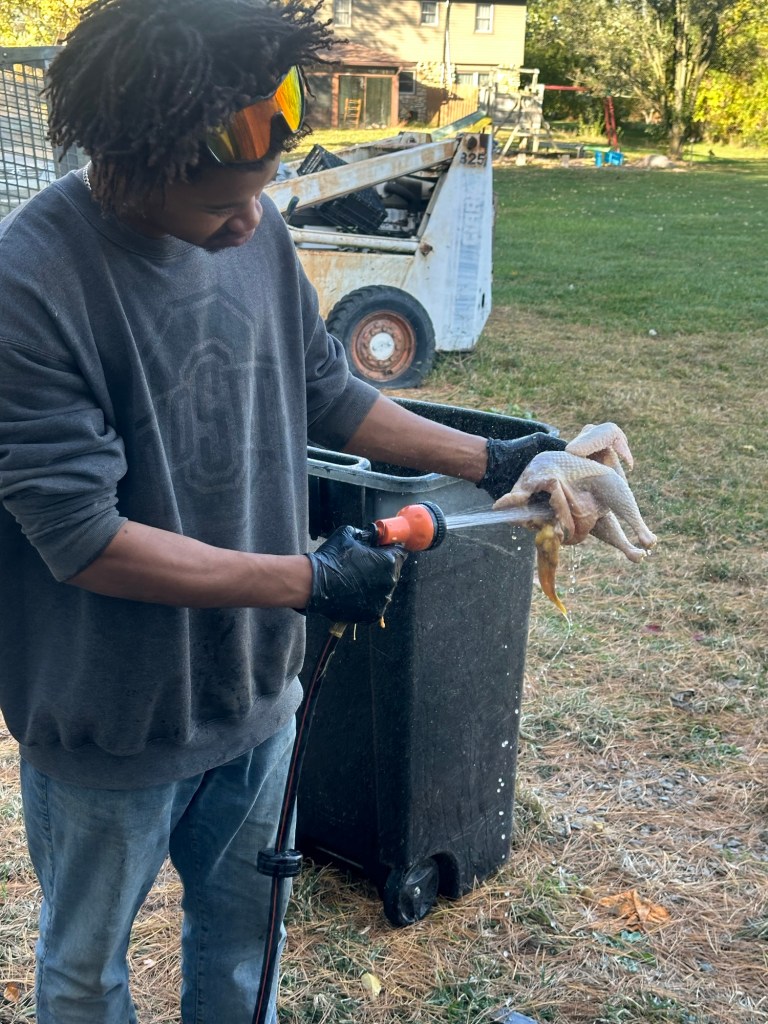
Spraying down the bird to wash out the cavity and remove any remaining debris after a learning moment in the gut-pulling step.
You’ll see him rinsing the bird in the photos — lesson learned and earned.
From Feather to Table
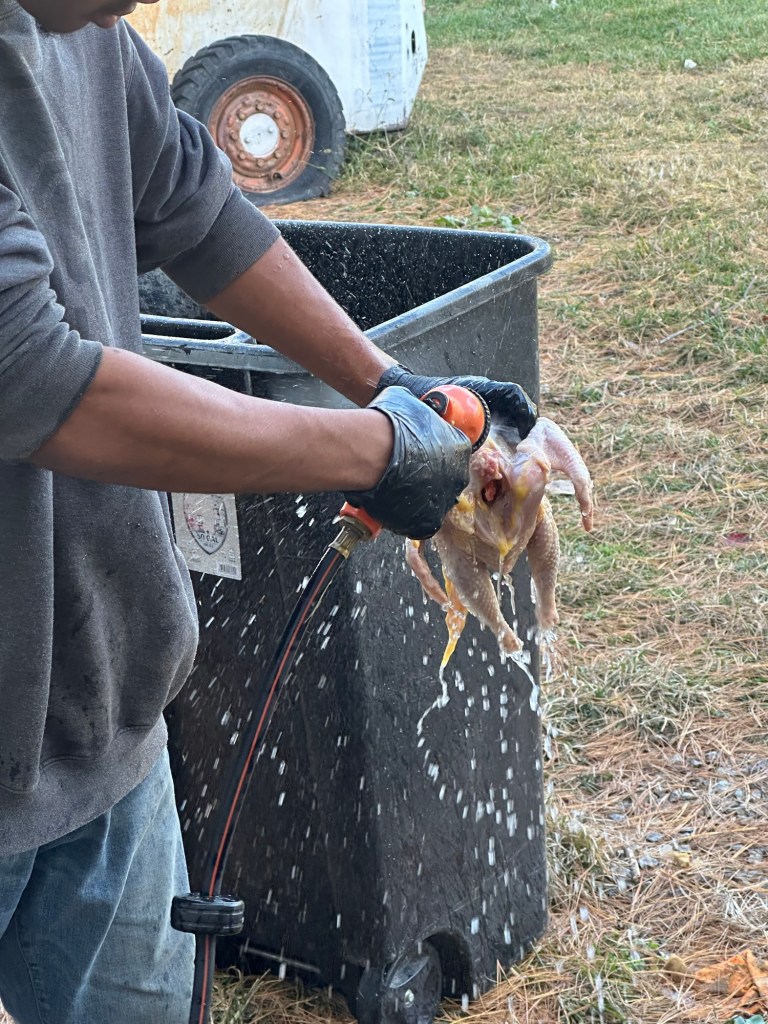
The bird emerging from the plucker, clean-skinned and ready for final rinsing before table processing.
After everything was clean, we laid her out on the stainless steel table. Step by step, Israel broke her down into familiar parts — wings, legs, breast, and backbone.
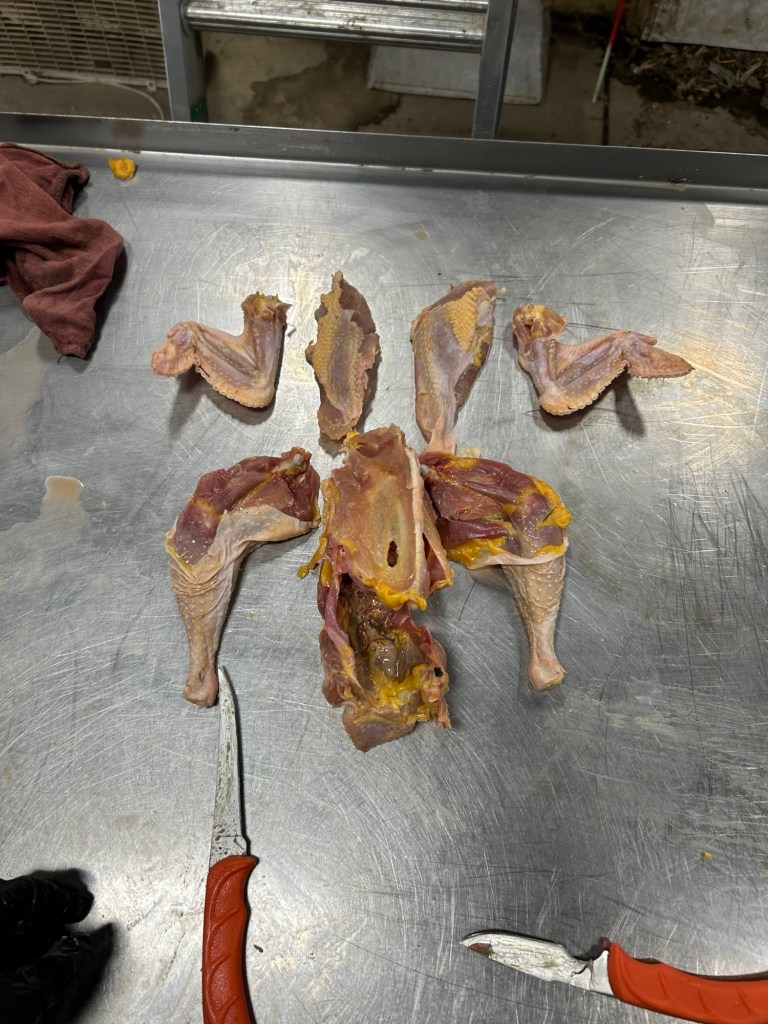
Fully dressed and portioned — each cut clean and precise. The red hue and yellow fat tell a story of age, diet, and life on pasture.
This hen wasn’t a young meat bird; she’d lived a full life. You can tell from the deep red meat and yellow fat — that color tells a story of movement, age, and a good corn-and-grain diet.
Cooking Tips for an Older Bird
Older birds are tougher but full of flavor. Here’s how to bring out the best in them:
Brine it overnight. Saltwater softens muscle fibers and helps the meat stay juicy. Slow cook or stew. Don’t rush it. A low simmer for a few hours transforms a tough bird into tender, flavorful broth and meat. Add acidity. A splash of vinegar, wine, or lemon in your marinade helps break down protein and adds brightness.
Israel’s taking this one home — his first bird, his first lesson in processing — and I told him, “You’ll earn every bite.”
He lives right here on the property, so when we say he’s taking it home, we mean back to his own fire, here at DaleWood.
Why We Do It
This wasn’t about loss — it was about learning, respect, and sustainability. We process to understand where our food comes from, to respect the life that sustains us, and to keep the cycle on the farm strong and honest.
Every new hatch we bring up honors the ones that came before.And if you’ve ever wondered why a chicken just dies — sometimes it’s age, sometimes health, sometimes the mystery of nature reminding us we’re part of something bigger. But the best thing you can do is turn that moment into a lesson.
Join the Conversation
Have you ever processed a chicken yourself?
How do you handle loss and learning on your homestead?
Drop a comment below — we’d love to hear your experiences, your tips, or your first-time stories.
3 responses to “DaleWood Talks: Processing Your First Farm Chicken — Life, Lessons, and Legacy”
So much that I did not know! Very informative and entertaining! Can not wait to see what you do next ! Amazing
Thanks for sharing the event and process.
Great tutorial on the chicken process after death. I’ve had the pleasure of being trained on my grandmother’s farm in Marion, Arkansas on how to process the chicken after she would wring the neck. I was only 14 years old and coming from Elkhart, IN where I was raised was quite eye opening😀 I really loved the country and learned a lot from my grandmother who was a share cropper. Your method is certainly from the way I had to do it, but really a more improved method. I would love to visit your farm. Thank you Mrs. Betty Watson