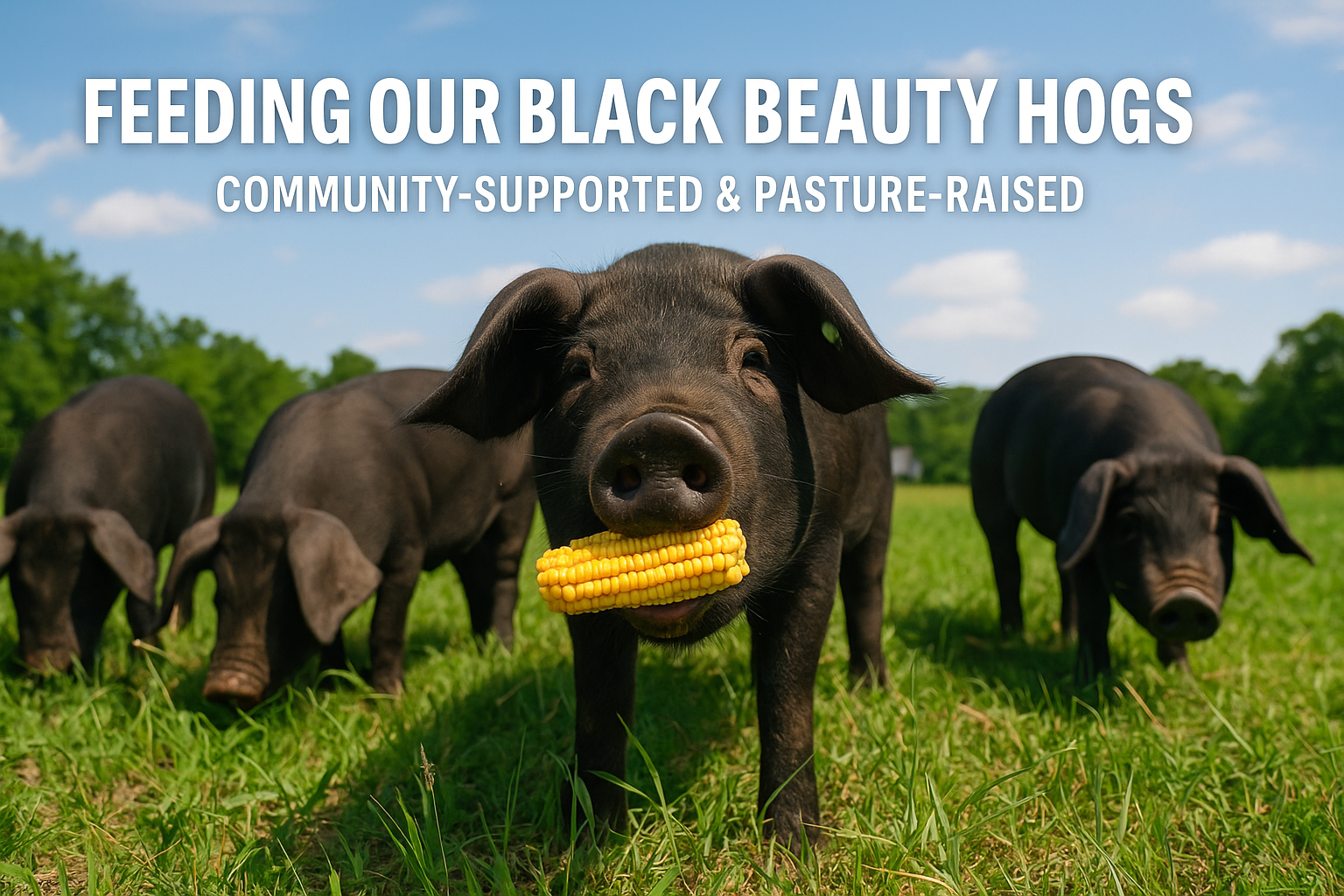
At DaleWood Farms, we live by a simple motto: pasture-raised, purpose-driven. Our goal isn’t just to raise animals, but to raise them well—in ways that honor the land, the animal, and the community that surrounds us.
Pasture First
Our hogs are raised on wide, open pastures where they forage naturally—nosing through grass, rooting in the soil, and fertilizing the land as they go. This natural cycle keeps the soil healthier and reduces waste buildup compared to confinement farming. It also makes for stronger pigs, because the more they move, the more muscle and bone they develop.
Fun fact: Pigs raised on pasture often have denser muscle fibers, which leads to richer flavor in the pork compared to conventional grain-fed pigs.

Community-Supported Feed
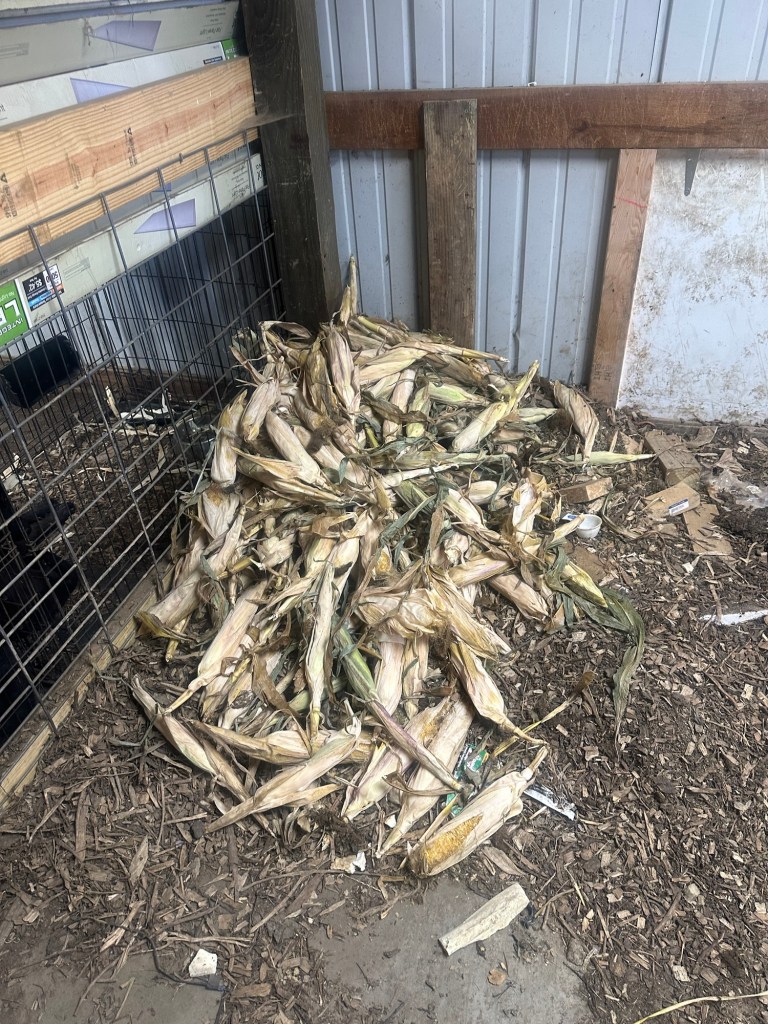
A huge part of how we keep costs low and nutrition high is through community partnerships. You might remember the story of Bob and his corn—well, here’s the pile of leftover corn that never made it to market. Instead of going to waste, it found a new purpose here at DaleWood Farms.
Each of our hogs gets about two ears of corn per day, enough to balance their forage without leaving waste behind.
And then there are the nectarines. Our friends at Prairie Hills Farm in Selma, Indiana, had surplus fruit that couldn’t be sold. Instead of hitting the dumpster, those nectarines became part of our feed program. We mash them down into scoops of sweet, vitamin-packed pig feed.
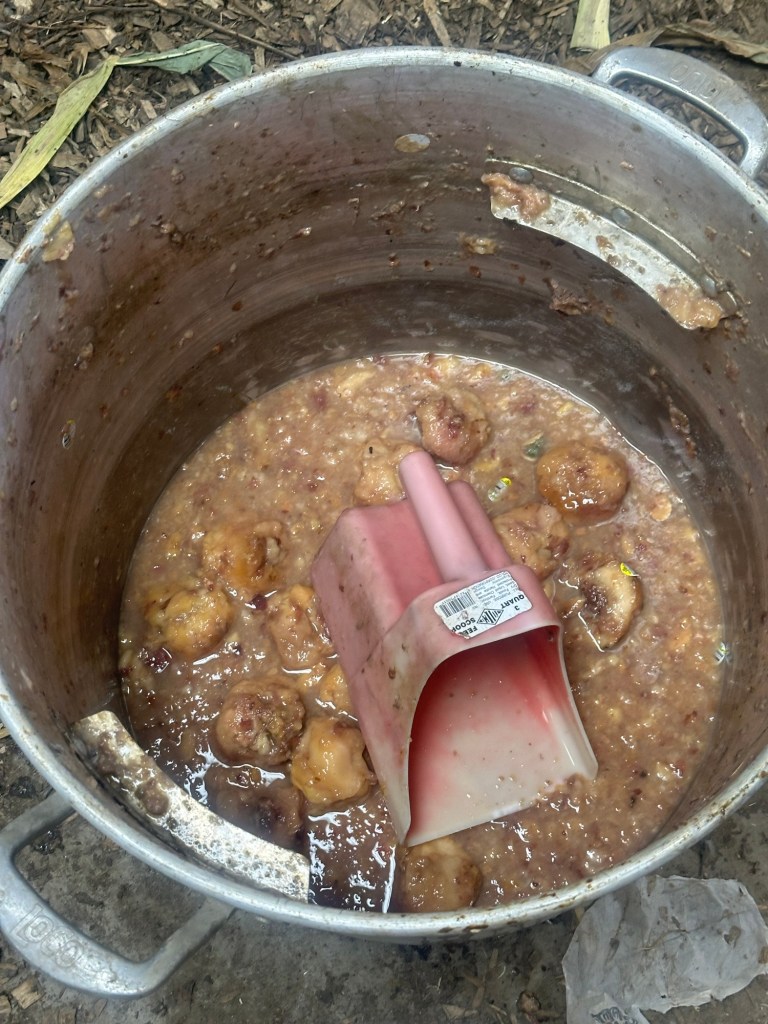
Right now, each of our seven hogs (six gilts and one boar) gets a portion of corn and nectarines daily—adding variety, energy, and nutrients to their diet.
Why Nectarines Work for Pigs
Nectarines are a stone fruit (meaning they have pits), and while goats shouldn’t eat them because certain compounds in the pits and leaves can be toxic, pigs are hardy and thrive on them. Nectarines provide:
Vitamin A for vision and immune health Vitamin C for growth and tissue repair Potassium for muscle function Natural sugars for quick energy
Here’s a fun fact you may not know: pigs can actually taste sweetness more sharply than humans do! Their taste buds are finely tuned to sugar, which is why fruit like nectarines becomes such a treat for them.
The Black Beauty Traits
In the photos, you’ll notice the long, floppy ears on our hogs. That trait comes from their Meishan side and isn’t just for looks. Those ears help them root and forage by sweeping the ground, almost like natural tillers. Combined with their Berkshire genetics, which bring muscle and marbling, you get a pig that’s calm, easy to handle, and produces pork that’s flavorful and tender.
We’re proud to be developing the DaleWood Black Beauty line—crossing Black Beauties with Black Beauties to strengthen these traits for the future. They’re docile, hardy, and perfectly suited for regenerative systems like ours.

Waste Into Purpose
This entire process—corn from Bob, nectarines from Prairie Hills, pasture forage—shows how “waste” can be transformed into purpose. Instead of trash, it becomes nutrition. Instead of loss, it becomes growth. And instead of working alone, it becomes community.
Scripture reminds us in Proverbs 12:10, “The righteous care for the needs of their animals.” That’s the heart of DaleWood Farms. Stewardship isn’t just about money—it’s about wisely using what’s already around us, caring for the land, the animals, and the people God puts in our path.
An Invitation to You
This is where you come in. Maybe you’ve got a bushel of apples, some pumpkins, or leftover produce that could be put to good use. Maybe you’re looking for a new source of pork, or want to try fresh eggs from our laying hens (we’re building the flock back up!). Maybe you just want to sit down and share a story about your own experiences with farming, food, or family.
We’d love to hear from you. We’d love to work with you. We’d love to sell to you. And if you’re reading this from the city with no plans of farming, stick around anyway—you’ll learn the lingo, pick up some insights, and maybe even find a memory or story of your own stirred up along the way.
👉 Subscribe to Dale Wood Talks and join a community that’s proving every day that farming can be purposeful, sustainable, and deeply connected.
Because here at DaleWood Farms, waste doesn’t just disappear—it’s turned into purpose. And purpose is what feeds us all.