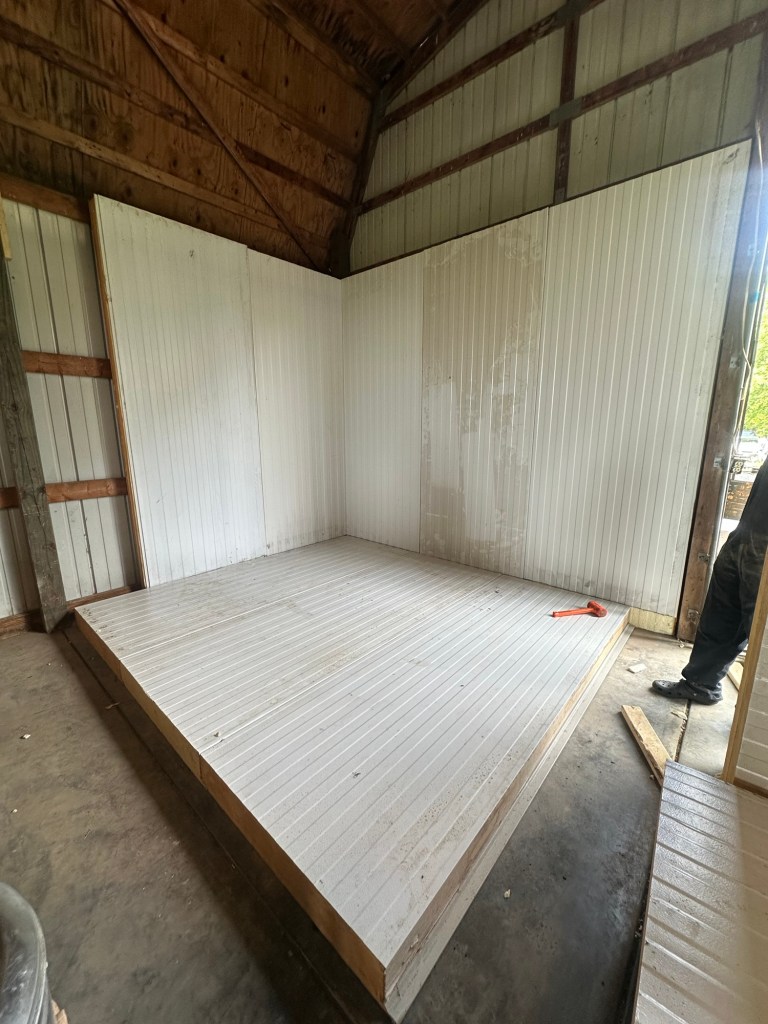
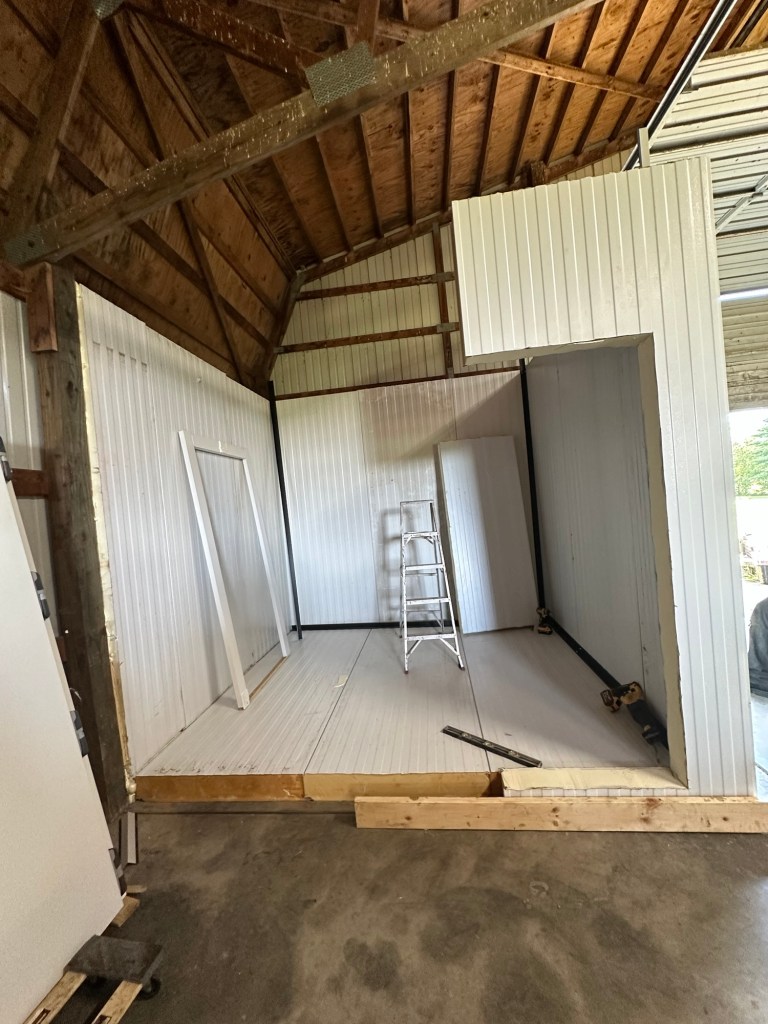
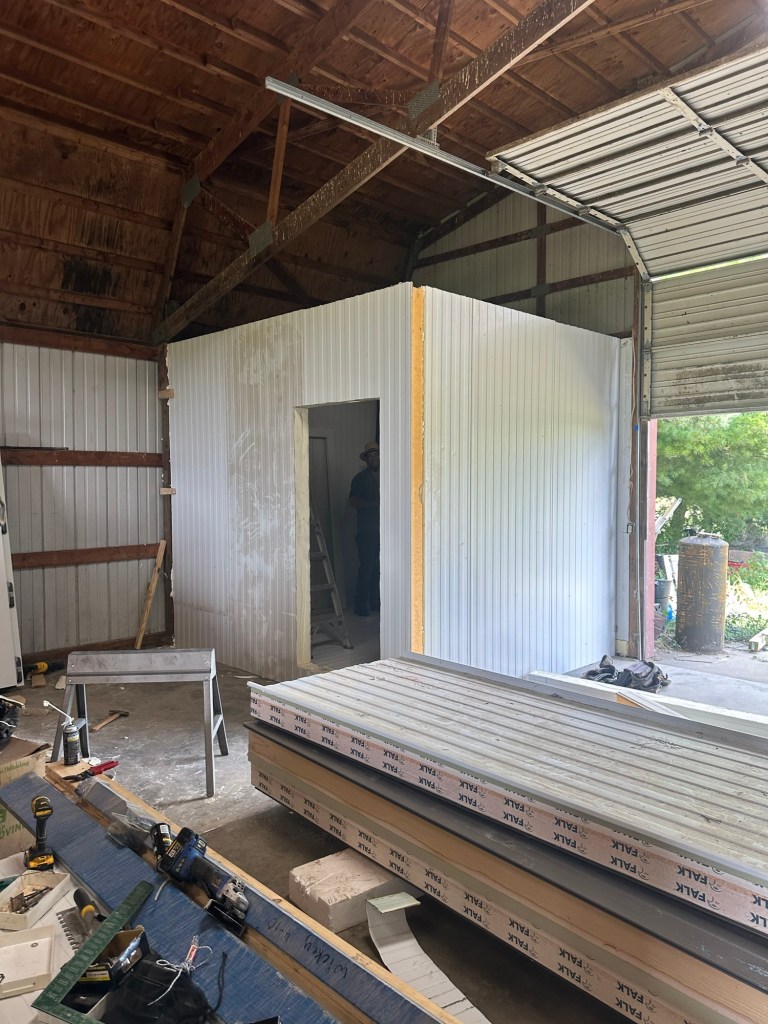
This project didn’t start with a kit. It started with a vision. What you see here are insulated panels, roughly 3½ to 4 feet wide by nearly 10 feet long, laid across our barn floor. The goal? A 10×10 outside diameter cold room (9×9 inside), standing 10 feet tall. Built not for today’s needs, but for tomorrow’s possibilities.

The panels themselves are 6 inches thick, tongue-and-groove Amish-style design, giving us an estimated R-40 insulation value. That’s a big deal, because insulation is money—less energy used, better efficiency, and long-term savings. Most people don’t think about R-value when planning cold storage, but it can make or break your system. Thinner 3–4 inch panels might be fine for a refrigerator, but for serious cold, you need thicker walls.
And that’s the path we’re carving out here at DaleWood Farms.
Why Build a Walk-In Cold Room?
We’ve been to plenty of farms and homesteads where barns are lined with chest freezers—four, five, sometimes more—all mismatched, all in different states of repair. When you ask their owners what they would do differently, the answer is almost always the same:
“We wish we had invested in proper cold storage from the start.”
So we took that advice to heart. As first-generation farmers, we’re trying to avoid those regrets. Do we need a 10×10 cold room right now? Honestly, no. But building with the future in mind gives us flexibility and a foundation for growth.
The Power of Insulation: R-Value Matters
“R-value” is just a fancy way of measuring how well something resists heat. Higher R-value = better insulation.
3–4 inch panels (R-20 to R-25): Enough for a refrigerator, not ideal for a freezer. 5–6 inch panels (R-35 to R-40): Capable of holding deep cold efficiently, perfect for freezers.
That’s why we went with six-inch panels. They’ll pay us back every month in energy savings and system longevity.
Refrigerator or Freezer? Our Crossroads
We’re still deciding whether to set this room up as a refrigerator or a freezer.
Refrigerator (35–40°F): Lower cost, great for produce, dairy, fresh meats, and daily use. Freezer (0°F and below): More expensive equipment, but it locks in long-term meat storage—exactly what we’ll need as our pork operation grows.
Some farmers get creative, pairing a standard wall-mount air conditioner with a CoolBot controller. The CoolBot tricks the AC into holding temps down around 34°F, turning a simple AC into a walk-in refrigerator system. It’s a proven, budget-friendly option if your insulation is solid.
For a true freezer, though, you need a dedicated freezer compressor system. That’s the next level, and our build is ready for it.
Why It Matters on the Homestead

Bulk Savings – Buying in halves, wholes, or bulk cuts saves money, and now we have the space to store it. Food Security – With proper vacuum-sealing, meat lasts 12–24 months in a deep freeze. “Losing quality” doesn’t mean the food is spoiled—just minor changes in texture or taste. Most of those sell-by and best-by dates? They’re more about moving product than protecting you. Customer Service – Eventually, subscription boxes and custom pork orders will move through this room. From inspected and certified cuts to pickup or shipping, this is the foundation for click-and-collect food security. Legacy Building – A farm isn’t built in a day. It’s built one purposeful piece at a time. This is one of those pieces.
Lessons Along the Way
This build came together with guidance from an Amish craftsman. Different faith, different background, but the same goal: a better life for our families. That’s what community is about.
We’re not just stacking panels; we’re stacking belief—belief in ourselves, in DaleWood Farms, and in a vision that outlives us.
Let’s Talk Cold Rooms – Your Turn
Do you have a walk-in freezer or cooler?
What setup are you running—CoolBot + AC, a refurbished reefer unit, or a bank of chest freezers? How long has yours lasted? Any tips or maintenance tricks to share?
Drop your story. Your advice might help the next farmer build smarter.