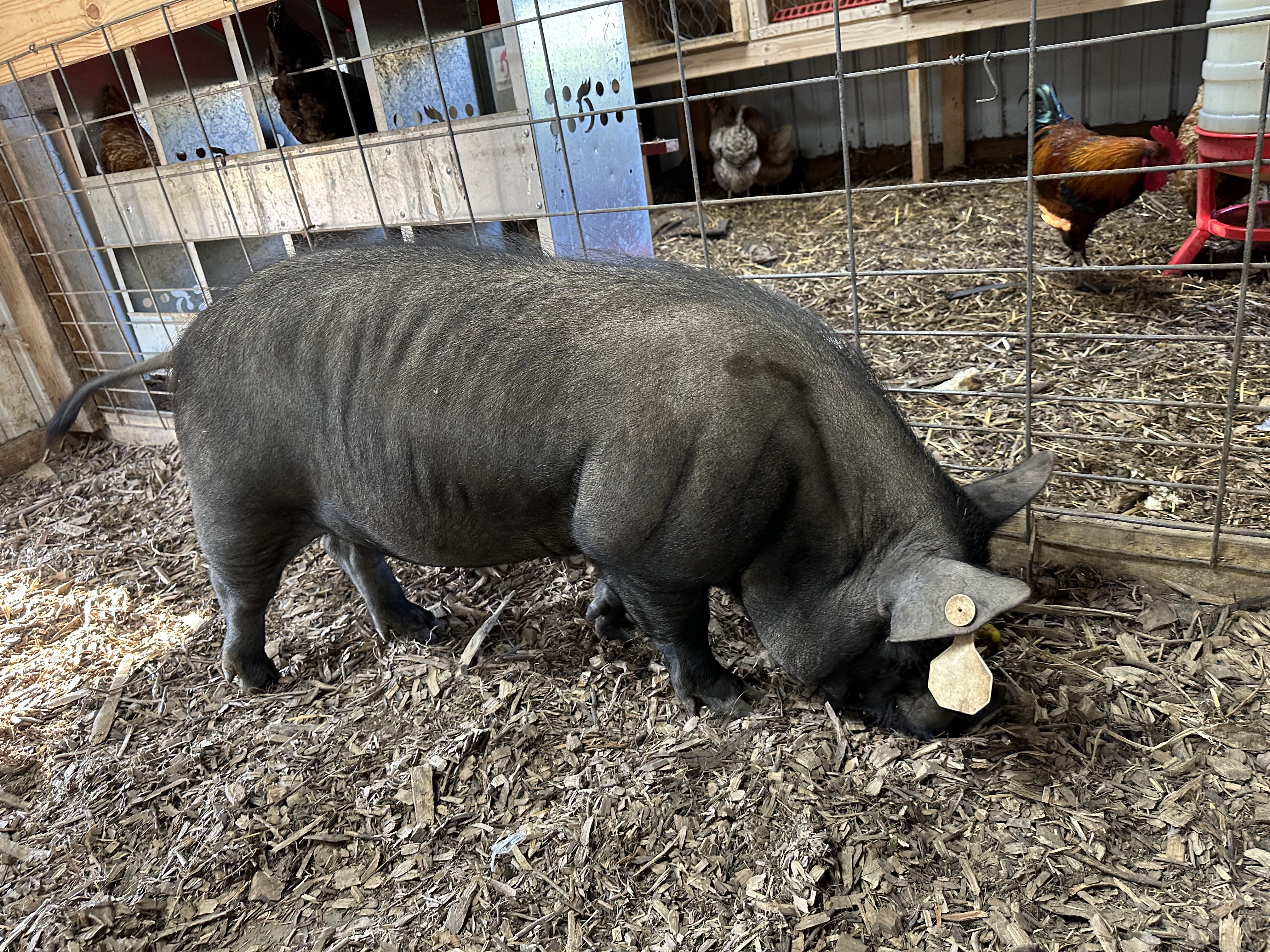
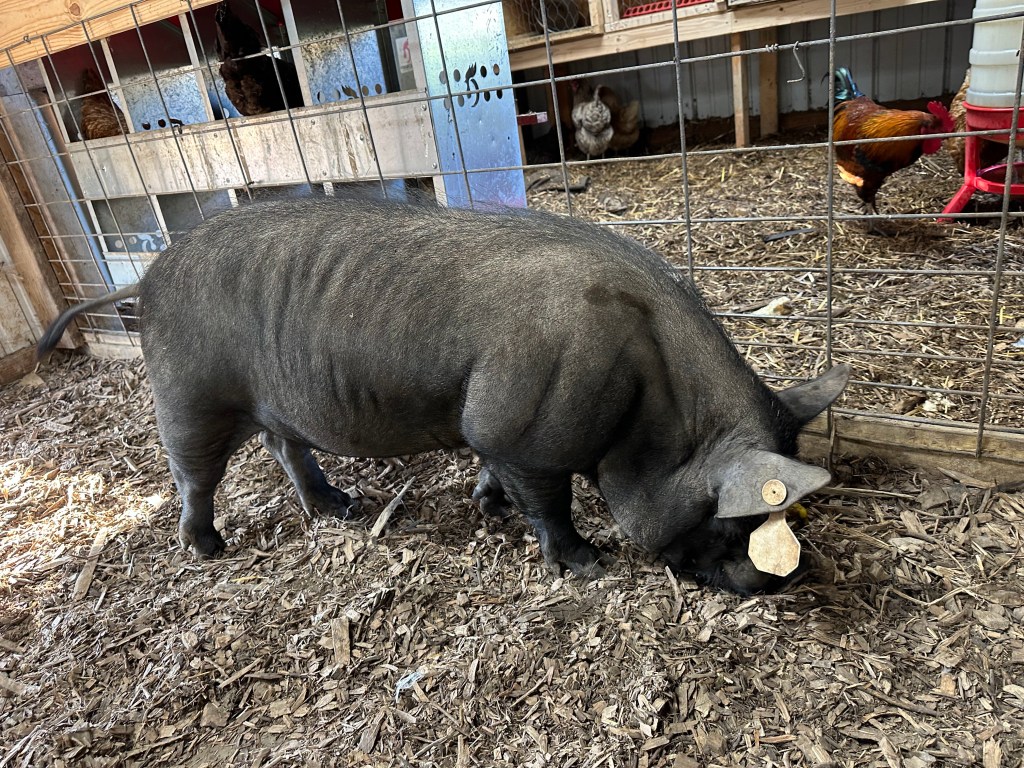
Let me tell you about this boar.
You’re looking at a fully grown KuneKune hog, over 200 pounds, short and stocky like he’s built for low gear, but packing some of the best-tasting pork you’ll ever eat. Wide shoulders, thick hams, fat marbling in all the right places—this is what slow, intentional farming looks like.
But here’s the thing—this hog isn’t just meat for the freezer. He’s a snapshot of our journey.
Humble Beginnings
When we first started raising pigs, it wasn’t because we had some grand business plan or a desire to slap “LLC” after our name. We were just trying to keep food on the table during a time when grocery prices seemed to jump every time you blinked.
We didn’t track growth charts. We didn’t have finish dates circled on the calendar. It was about feeding our family, plain and simple. And even then—right in the middle of inflation—we watched the breeders we bought from raise their prices year after year. Just like everything else, even the cost of getting pigs to raise was climbing.
We’d been ripped off before, too—burned by scam artists pretending to sell pigs. Those lessons made us sharper. We started noticing patterns: some pigs thrived on pasture, while others needed more grain to do well. Certain breeds were more aggressive if a feeding was late, and some were escape artists who could test a fence better than any electrician with a volt meter.
Over the years, we tried three or four breeds—Michon, Yorkshire, Durock, and even a Blue Butt. Each came with its own story, its own quirks. We learned the value of buying grain smart—starting with 50-pound bags from the local farm stores like Tractor Supply and Rural King, then moving up to sourcing from a local grainery, working with them to balance feed with pasture to stretch the budget without sacrificing health.
We also learned fast that our original 46-by-60 pen wasn’t enough. Escapes, crowding, and wear on the pasture pushed us to keep improving—adding fencing, making small upgrades, and constantly tweaking the setup to make it better.
The Shift
As time went on, we realized we could be more than just self-sufficient. We had the space, the land, and the dedication to help others feed their families, too. That’s when DaleWood Farms went from “just enough for us” to a purpose-driven, pasture-raised operation.
We started tracking weights, keeping better records, rotating pastures, and managing our herd intentionally—because in farming, what you don’t measure, you can’t improve.
How We Measure Without a Scale
A lot of people think you need a fancy livestock scale to know your pig’s weight. You don’t. You just need a measuring tape, a little math, and a good relationship with your animals.
Here’s the thing—this isn’t a “walk out there once a month and slap a tape on them” kind of deal. This method requires you to be hands-on. I’m out here twice a day, every day, feeding, checking, and interacting with our pigs. They know me. They trust me. That’s what lets me walk right up, wrap a tape measure around their chest, and get a length measurement without turning it into a rodeo.
The process is simple:
- Length – Measure from the base of the ears to the base of the tail.
- Girth – Wrap the tape around the chest just behind the front legs.
- Formula – Multiply girth × girth × length, then divide by 400.
Back in June, this guy measured 3 feet 7 inches long (43 inches). With his girth measurement plugged into the formula, we knew he was closing in on butcher weight without ever stepping on a scale. It’s not perfect, but it’s close enough to plan feed and schedule the processor.
Time to Finish
This boar was weaned in February 2024, raised primarily on pasture with a little grain for balance, and finished in August 2025. That’s about 18 months—slower than commercial operations, but the result is richer flavor and healthier fat.
And to be fair, we don’t expect every hog to take that long going forward. Now we’re intentional. Pasture-raised. Purpose-driven. That’s why it’s important for folks to get on the pre-order or wait list—so we can grow exactly what’s needed, when it’s needed, instead of guessing.
Boar Taint—The Elephant in the Barn
If you’ve never heard of boar taint, it’s basically an odor or taste some people pick up from meat of intact males. Some can’t detect it at all, others can smell it from across the room. The safest way to avoid it? Castration when they’re young. That’s something we’ll be doing going forward—not because we’ve had big problems, but because we want every customer to have the best eating experience possible.
Closing Thoughts
This boar’s story is our story. From humble beginnings in the backyard to a farm that feeds more than just our family, every step has been a lesson. We’ve learned how to work with the land, how to track our animals’ growth, and how to balance tradition with efficiency.
At DaleWood Farms, we’re not just raising pigs—we’re raising a standard. Pasture-raised. Purpose-driven. And always worth the wait.
2 responses to “From Backyard Pork to Feeding the Community: A DaleWood Farms Talk”
This is great! I’ve enjoyed watching the growth of your family as farmers. It’s a beautiful journey and we are incredibly proud of you and your family!
Thank you we continue to grow and hopefully learn from this life, sharing as much of the experience as possible.