This morning started like any other—feed the animals, check the pens, sip some coffee, shake off the cobwebs. But today, the cobwebs shook back.
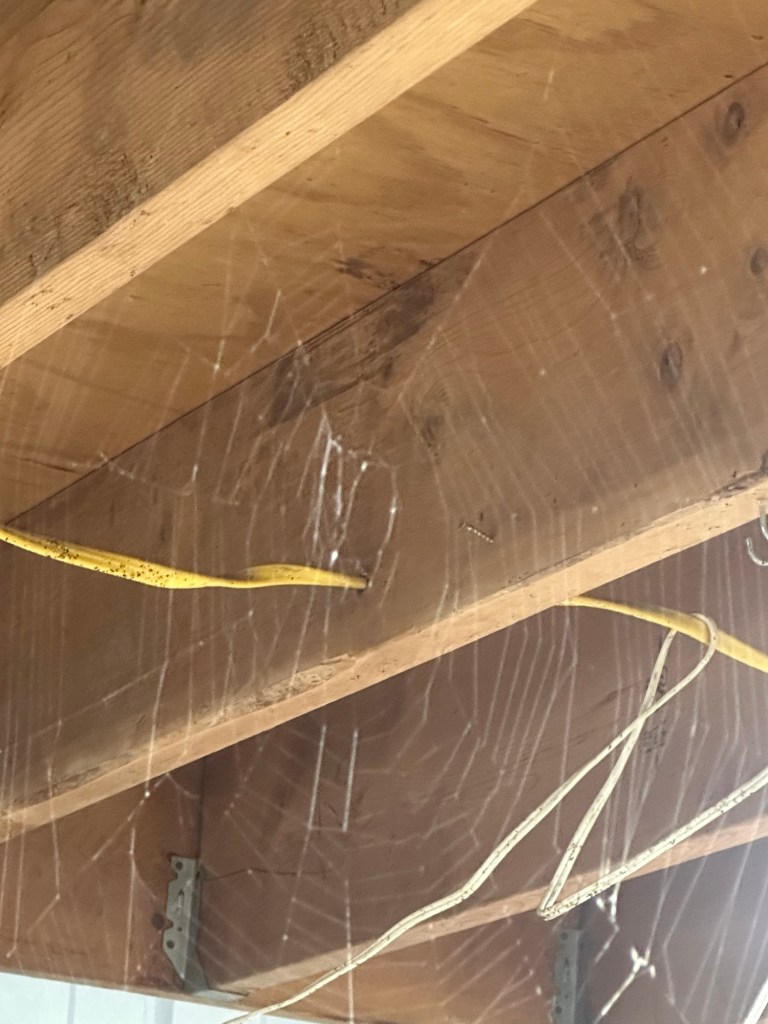
I flipped on the lights in the chicken stalls, and there it was: the biggest spiderweb I’ve ever seen, stretching nearly halfway across the pen. In the center sat a spider so big, round as a half-dollar, just waiting. For a second, I froze. My first instinct was panic. But then something strange happened—I leaned in, drawn to its size, its symmetry, the sheer beauty of its work.
And then, like a switch flipping, my spidey sense kicked in. I noticed the silence. No flies buzzing, no movement. The web wasn’t just beautiful—it was a trap. And for a moment, I realized, I was the one caught staring too long.
By the time I went back to snap a photo, the spider had moved on—but his masterpiece was still hanging there, proof of how quickly nature builds and disappears.
Here’s the thing: as creepy as spiders can feel, they’re some of the best farmhands you’ll never pay. A single spider can eat dozens of flies, gnats, and mosquitoes in a night. Their webs act like natural flytraps, helping cut down on pests that carry disease and bother both animals and people. On a homestead, every spider is a tiny, eight-legged partner in keeping balance—and tearing down their webs is like pulling down free bug control.
That’s farming and homesteading for you. The randomness keeps you on your toes. One minute you’re feeding chickens, the next you’re humbled by a spider’s design and reminded how quickly nature can pull you in.
And me? Well, I guess it only makes sense… on this farm, even the Webb can nearly get caught in a web.